Airport Immigration Process Explained
Going through immigration for the first time? Learn what happens at airport immigration, which documents you need, and how to make the process easier.
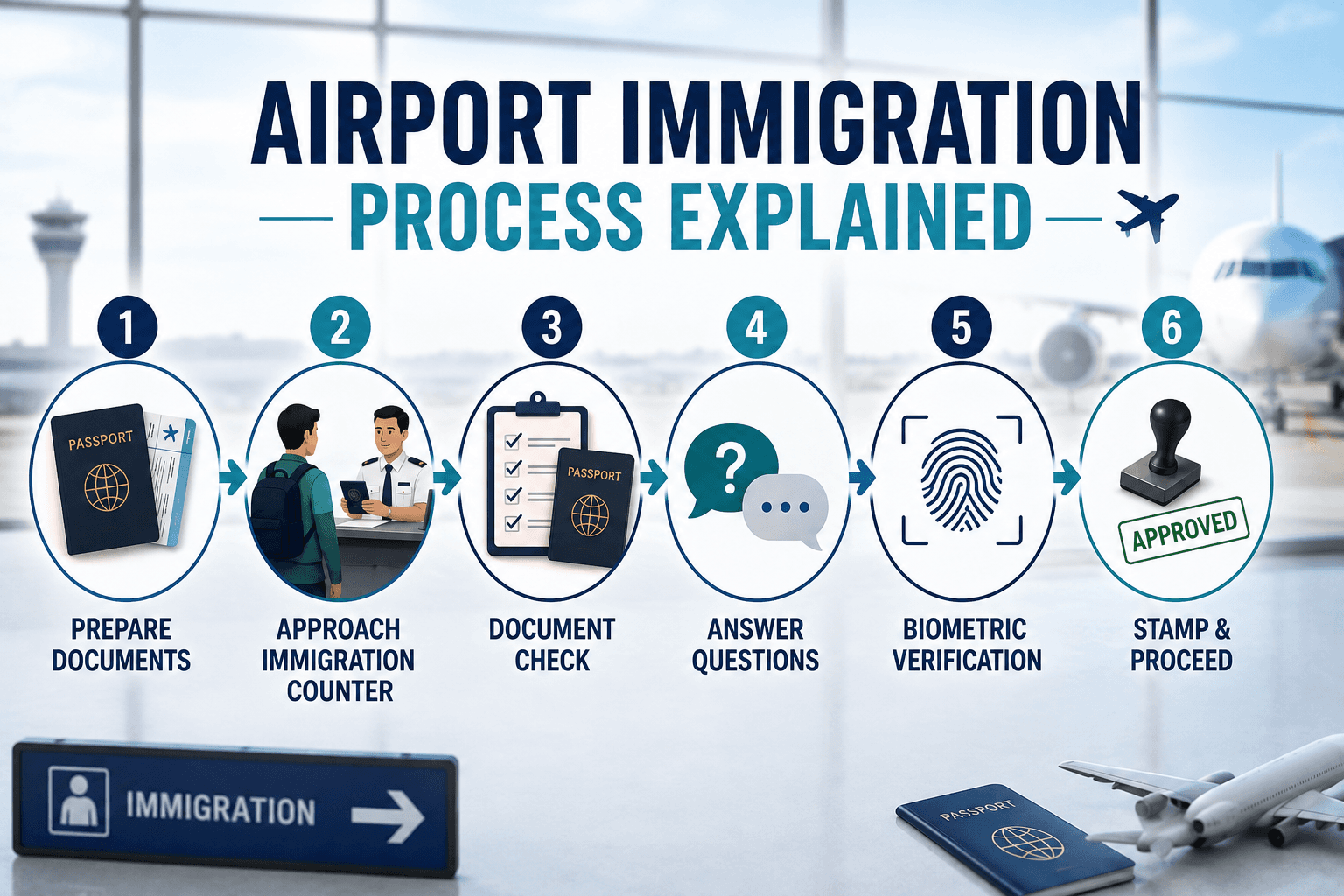
Airport Immigration Process Explained: What to Expect
Going through immigration can feel confusing, especially if you are travelling internationally for the first time. After checking in and passing airport security, passengers travelling abroad may need to go through immigration before continuing to their departure gate.
The immigration process is designed to verify your identity, travel documents, and eligibility to leave or enter a country.
Knowing what to expect can make the process much easier and less stressful.
What Is Airport Immigration?
Airport immigration is the process through which government immigration officers check passengers travelling internationally.
Officers may verify:
- Your passport
- Visa or travel authorization
- Travel purpose
- Destination
- Flight information
- Entry or exit requirements
The exact process varies depending on the country, airport, and your travel circumstances.
When Do You Go Through Immigration?
The timing depends on whether you are leaving a country or arriving in one.
When Departing
When leaving your home country for an international destination, you may go through departure immigration after check-in and security procedures.
For example:
Pakistan → Immigration → Security → Departure Gate → International Flight
When Arriving
When you arrive in another country, you normally go through immigration before collecting your checked baggage and completing customs procedures.
For example:
International Flight → Immigration → Baggage Collection → Customs → Exit
The order can vary between airports.
Documents You Should Keep Ready
Before reaching the immigration counter, keep your important documents easily accessible.
These may include:
- Valid passport
- Visa, if required
- Boarding pass
- Travel itinerary
- Hotel booking
- Return or onward ticket
- Travel insurance, when required
- Supporting documents for your trip
You may not be asked for every document, but having them available can make the process smoother.
What Happens at the Immigration Counter?
When you reach the immigration officer, you will normally present your passport and other required documents.
The officer may:
- Check your passport.
- Verify your visa or travel authorization.
- Ask questions about your journey.
- Check your travel details.
- Take your photograph or biometric information, where applicable.
- Record your entry or exit.
- Allow you to continue if everything is in order.
The exact procedure depends on the country and airport.
What Questions Can Immigration Officers Ask?
Immigration officers may ask simple questions about your trip.
For example:
- Where are you travelling?
- What is the purpose of your trip?
- How long will you stay?
- Where will you stay?
- Who are you travelling with?
- When will you return?
- Do you have a return or onward ticket?
Answer questions clearly and truthfully.
There is usually no need to provide lengthy explanations unless the officer asks for more information.
What If You Are Travelling for Tourism?
Tourists may be asked about their destination and travel plans.
You should generally know:
- Your destination city
- Hotel or accommodation details
- Length of stay
- Return or onward travel plans
- Purpose of your visit
Keeping your hotel confirmation and return ticket accessible can be useful if an officer asks for them.
What If You Are Travelling for Business?
Business travellers may need to provide additional information about their trip.
You may be asked about:
- Company or employer
- Purpose of the business visit
- Meetings or events
- Duration of stay
- Business invitation or supporting documents
Make sure your visa or travel authorization allows the type of activity you plan to undertake.
Biometric Checks at Immigration
Many airports use biometric technology as part of immigration procedures.
Depending on the country, this may include:
- Fingerprints
- Facial recognition
- Digital photographs
These checks help authorities verify a traveller's identity.
Follow the instructions provided by the immigration officer or automated immigration system.
Automated Immigration Gates
Some airports offer automated passport-control gates, sometimes called e-gates.
Instead of speaking directly with an immigration officer, eligible passengers may:
- Scan their passport.
- Enter the automated gate.
- Complete facial or biometric verification.
- Wait for the system to confirm their identity.
- Continue after approval.
Not every passenger is eligible to use e-gates, and availability varies by country and airport.
What Happens After Immigration?
The next step depends on whether you are departing or arriving.
Departing
After completing departure immigration, you may continue toward:
- Security screening, if applicable
- Duty-free areas
- Departure lounges
- Your boarding gate
Arriving
After arrival immigration, you normally continue to:
- Baggage claim
- Customs
- Airport exit
Follow the airport signs and instructions.
How Long Does Immigration Take?
There is no fixed processing time.
Immigration can take only a few minutes when the airport is quiet, but busy periods can result in longer queues.
Processing time may depend on:
- Airport traffic
- Number of immigration counters
- Passenger nationality
- Visa requirements
- Biometric procedures
- Time of day
- Arrival or departure volume
This is why it is important to arrive at the airport with enough time before your flight.
What If You Have a Connecting Flight?
If you have a connecting flight, whether you need to go through immigration depends on your route and the countries involved.
For some international connections, passengers can remain within the transit area.
In other situations, you may need to pass through immigration, especially if you:
- Enter the transit country
- Change airports
- Change terminals
- Collect and re-check baggage
- Travel on separate tickets
Always check the transit requirements for your specific itinerary.
Immigration vs Customs
Immigration and customs are different processes.
Immigration
Immigration focuses mainly on your:
- Identity
- Passport
- Visa
- Travel purpose
- Permission to enter or leave
Customs
Customs focuses on what you are bringing into the country.
Customs may deal with:
- Goods
- Food
- Currency
- Commercial items
- Restricted products
- Other declared items
You may therefore go through immigration first and customs afterward when entering a country.
Tips for a Smooth Immigration Process
Follow these simple tips:
- Keep your passport easily accessible.
- Make sure your passport is valid.
- Check your visa requirements before travelling.
- Keep your hotel and flight details available.
- Know the purpose and duration of your trip.
- Answer immigration questions clearly and truthfully.
- Follow the officer's instructions.
- Avoid giving unnecessary information.
- Keep important documents organized.
- Allow extra time during busy travel periods.
Common Immigration Mistakes to Avoid
Travellers can sometimes create unnecessary problems by being unprepared.
Avoid:
- Travelling without the required visa.
- Giving incorrect information.
- Not knowing your accommodation details.
- Carrying inconsistent travel documents.
- Ignoring visa conditions.
- Losing your passport or important documents.
- Providing false information to an immigration officer.
Always check the current entry and exit requirements before your journey.
What If Immigration Asks for More Documents?
Sometimes an immigration officer may request additional documents or information.
For example, you may be asked for:
- Proof of accommodation
- Return ticket
- Proof of sufficient funds
- Invitation letter
- Travel insurance
- Employment or business documents
The requirements depend on the country, visa type, and purpose of travel.
If additional documents are requested, provide the relevant information clearly.
Final Thoughts
Airport immigration is an important part of international travel. Although the process can seem intimidating, being prepared can make it much easier.
Keep your passport and travel documents organized, understand your visa requirements, know your travel plans, and answer questions honestly.
Before travelling internationally, always check the latest immigration and entry requirements for your destination because rules can change.
With the right preparation, you can approach airport immigration with confidence and continue your journey smoothly.
Share this article
Keep Exploring
Related Articles

Multi-City Flights
Planning to visit multiple cities? Learn how multi-city flights work, their benefits, booking process, and important tips for travellers.
24 September 2026
Separate Tickets vs One Booking
Planning a connecting journey? Learn the difference between separate tickets and one booking, how missed connections are handled, and what Pakistani travellers should know before booking.
18 September 2026

How Airline Rebooking Works
Flight disrupted or cancelled? Learn how airline rebooking works, when you may be rebooked, what happens to connecting flights, possible fees, and what passengers should do next.
18 September 2026
Need help planning your journey?
Contact New Umer Holidays Travel for flights, Umrah services, visa assistance, hotel bookings and travel insurance.