Common Visa Rejection Reasons
Worried about visa rejection? Learn the common reasons applications are refused and how careful preparation can help you avoid common mistakes.
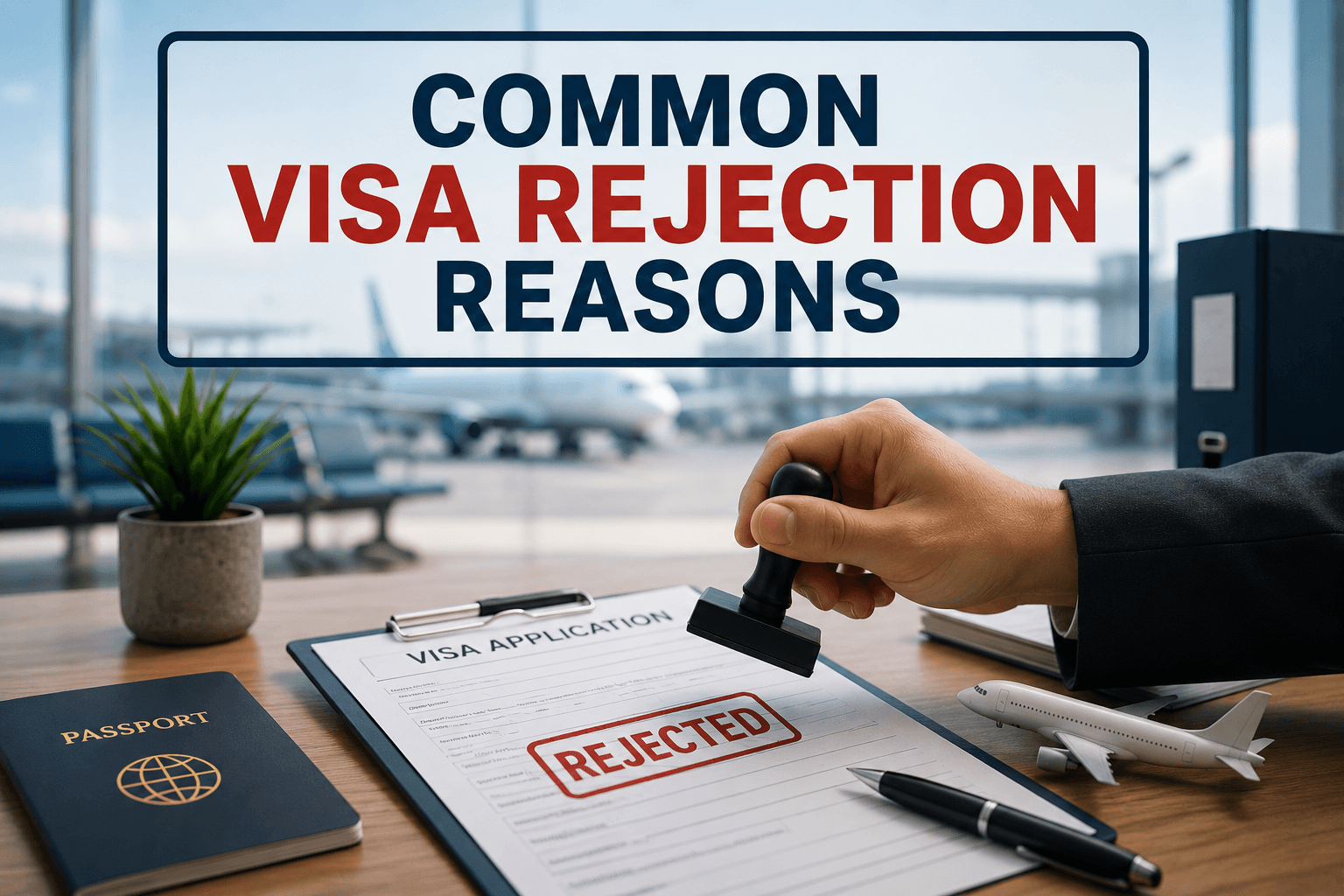
Common Visa Rejection Reasons: What Travellers Should Know
Applying for a travel visa can be stressful, especially when you are unsure whether your application will be approved. While visa decisions depend on the destination country, visa category, and individual circumstances, certain problems commonly lead to applications being refused.
Understanding these common reasons can help travellers prepare stronger and more complete applications.
What Does Visa Rejection Mean?
A visa rejection means that the relevant authority has decided not to grant the requested visa.
The reason for refusal can vary depending on the country and type of visa. In some cases, the problem may be an incomplete application or missing documents. In others, the immigration or consular authority may not be satisfied with the applicant's travel purpose, financial circumstances, or eligibility.
A rejection does not necessarily mean that a person can never obtain a visa. Depending on the circumstances and applicable rules, an applicant may be able to correct the issue and apply again.
1. Incomplete Application
One of the most common problems is submitting an incomplete application.
This can happen when an applicant:
- Leaves required fields blank
- Fails to submit supporting documents
- Provides incomplete information
- Misses a required signature
- Does not follow application instructions
Before submitting your application, carefully review every section and make sure all required information is provided.
2. Incorrect or Inconsistent Information
Information in your application should be accurate and consistent with your supporting documents.
Problems can occur when:
- Your dates do not match
- Your employment details are inconsistent
- Your accommodation information is different
- Your travel purpose changes between documents
- Personal information contains errors
Even a simple mistake can create questions about the accuracy of an application.
Always review your application before submission.
3. Insufficient Financial Evidence
Some visa categories require applicants to demonstrate that they have sufficient funds for their planned trip.
Financial concerns can arise when the documents provided do not clearly demonstrate the ability to cover:
- Accommodation
- Transportation
- Daily expenses
- Return travel
- Other planned costs
If financial documents are required, provide genuine and relevant evidence according to the visa requirements.
4. Unclear Purpose of Travel
Your reason for travelling should be clear and appropriate for the visa category you are applying for.
For example, if you are applying for a tourist visa, your application should clearly explain your intended tourism activities.
Problems can arise if:
- Your travel purpose is unclear
- Your itinerary does not match your stated purpose
- Your documents suggest a different reason for travelling
- You provide unnecessary or contradictory information
Keep your travel plans realistic and consistent.
5. Weak Supporting Documents
Supporting documents help demonstrate that the information in your application is genuine.
Depending on the visa, documents may include:
- Employment letters
- Bank statements
- Hotel reservations
- Flight itinerary
- Invitation letters
- Travel insurance
- Business documents
- Educational documents
Submitting documents that are incomplete, unclear, outdated, or inconsistent with your application can create problems.
6. Passport Problems
Your passport must meet the requirements of the destination country.
Issues may include:
- Insufficient remaining validity
- Damaged passport
- Insufficient blank pages
- Incorrect personal information
- Passport details that do not match the application
Check your passport carefully before beginning the visa process.
7. Previous Immigration or Visa Problems
Previous immigration history can sometimes affect a visa application.
Examples may include:
- Previous visa refusals
- Overstaying a visa
- Violating immigration conditions
- Previous deportation or removal
- Providing incorrect information in an earlier application
If an application asks about previous visa or immigration history, answer honestly.
8. Failure to Meet Visa Requirements
Every visa category has specific eligibility requirements.
An application can be refused if the applicant does not meet the applicable requirements.
For example, a visa category may have requirements related to:
- Age
- Employment
- Financial circumstances
- Purpose of travel
- Sponsorship
- Education
- Accommodation
- Travel history
Always check the official requirements for the specific visa you are applying for.
9. Unclear Travel Plans
A visa application should normally present a reasonable and understandable travel plan.
Problems may arise when an itinerary:
- Contains unexplained gaps
- Has unrealistic travel dates
- Does not match accommodation bookings
- Does not match flight information
- Includes destinations that do not fit the stated purpose
Your itinerary should accurately represent your intended trip.
10. Lack of Evidence Supporting Your Circumstances
Depending on the visa category, an applicant may need to provide evidence supporting their personal, professional, or financial circumstances.
For example, supporting evidence may include:
- Employment documentation
- Business records
- Educational enrollment
- Family-related documents
- Financial records
The exact requirements depend on the destination and visa type.
11. Problems With Sponsorship
If someone else is sponsoring your trip, the application may require evidence explaining the sponsorship arrangement.
Problems can occur when:
- The sponsor's relationship is unclear
- Financial evidence is insufficient
- Sponsorship documents are incomplete
- Information differs between the applicant and sponsor
- The purpose of sponsorship is unclear
Make sure sponsorship documents meet the specific requirements of the visa application.
12. Missing or Unclear Accommodation Details
Some visa applications require evidence of where the applicant intends to stay.
Issues may arise when:
- Accommodation dates do not match the trip
- The booking does not show the applicant's name
- The address is incomplete
- Accommodation does not cover the planned stay
- The submitted information conflicts with the itinerary
Keep your accommodation information accurate and consistent.
13. Missing Required Travel Documents
Different destinations can require different supporting documents.
Depending on the visa, you may need documents such as:
- Passport
- Photographs
- Application confirmation
- Travel insurance
- Financial evidence
- Accommodation proof
- Invitation letter
- Employment documents
- Other supporting documents
Missing a required document can delay or negatively affect an application.
14. Providing False or Misleading Information
Providing false information or fake documents is a serious problem.
Never:
- Create fake bank statements
- Submit fake hotel bookings
- Invent employment
- Hide relevant information
- Alter official documents
- Misrepresent your travel purpose
Always provide genuine information and authentic documents.
False or misleading information can have serious consequences beyond a single visa application.
15. Not Preparing for the Visa Interview
Some visa categories involve an interview.
Applicants can face difficulties if they:
- Cannot explain their travel purpose
- Give answers that conflict with their application
- Do not know basic itinerary details
- Provide unclear answers
- Give false information
- Appear unfamiliar with their own application
You should understand the information submitted in your application and be prepared to explain your genuine travel plans.
16. Applying for the Wrong Visa Type
Choosing the wrong visa category can create significant problems.
For example, tourist, business, student, work, family visit, and transit visas can have different requirements.
Before applying, make sure the visa category matches your actual purpose of travel.
17. Applying Too Late
Visa processing can take time.
Applying shortly before your planned departure may create problems if:
- Additional documents are requested
- An interview is required
- Processing takes longer than expected
- Your application needs further review
Apply early enough to account for the processing timeframe published by the relevant authority.
Avoid purchasing non-refundable travel arrangements before understanding the applicable visa requirements and risks.
18. Not Following Official Instructions
Visa applications often have specific instructions regarding:
- Application forms
- Photographs
- Documents
- Fees
- Biometrics
- Appointments
- Document translations
- Submission methods
Ignoring these instructions can result in delays or other problems.
Read the official instructions carefully before submitting your application.
How Can You Reduce the Risk of Visa Rejection?
There is no way to guarantee visa approval, but careful preparation can reduce avoidable mistakes.
Before applying:
- Choose the correct visa category.
- Check the latest official requirements.
- Complete the application accurately.
- Make sure your information is consistent.
- Prepare genuine supporting documents.
- Check your passport validity.
- Prepare clear financial evidence when required.
- Make sure your travel plans are realistic.
- Prepare for an interview if applicable.
- Submit your application well before your planned travel date.
What Should You Do If Your Visa Is Rejected?
If your application is refused, carefully read the refusal information provided by the relevant authority.
Try to understand:
- Why the application was refused
- Which requirement was not satisfied
- Whether additional information is needed
- Whether an appeal or review is available
- Whether you can submit a new application
Do not simply submit the same application again without addressing the reason for refusal.
If the refusal involves a complex immigration issue, consider obtaining advice from a qualified immigration professional.
Final Thoughts
Visa rejection can be disappointing, but many avoidable problems can be reduced through careful preparation.
Make sure your application is complete, your documents are genuine, your financial and travel information is clear, and your chosen visa category matches your actual purpose of travel.
Most importantly, always check the latest requirements from the official embassy, consulate, immigration authority, or visa application center for your destination.
Visa requirements and decision-making procedures vary between countries, so there is no single checklist that guarantees approval.
Share this article
Keep Exploring
Related Articles
Single Entry vs Multiple Entry Visa
Single entry and multiple entry visas differ mainly in how many times you can enter a country during the visa's validity. Learn how each visa type works and which may suit your travel plans.
10 September 2026
Visa Cover Letter: What Should It Include?
A well-prepared visa cover letter can clearly explain your travel purpose, itinerary, finances, and supporting documents. Learn what to include and how to write an effective cover letter.
7 September 2026
Bank Statement Requirements for Visa Applications
Bank statements are an important part of many visa applications. Learn what visa officers may look for, how to prepare your statements, and common financial-document mistakes to avoid.
7 September 2026
Need help planning your journey?
Contact New Umer Holidays Travel for flights, Umrah services, visa assistance, hotel bookings and travel insurance.