International Airport Guide for Pakistani Travellers: Check-In, Immigration & Boarding Explained
A simple guide for Pakistani travellers covering airport check-in, baggage, immigration, security and boarding for international flights.
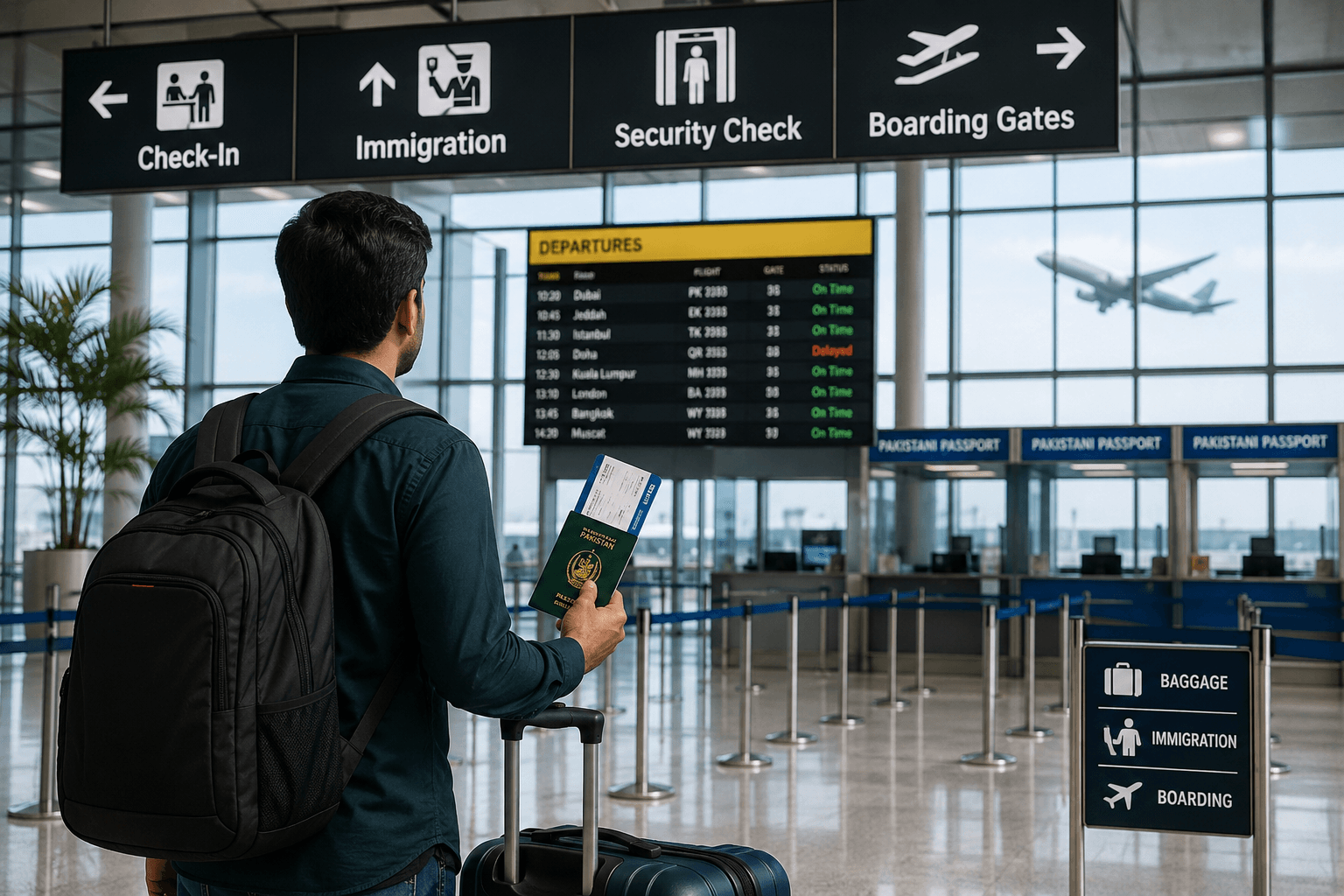
Absolutely — here is the ready-to-publish version in the same format as your previous blogs, with the SEO details included.
Title: International Airport Guide for Pakistani Travellers: Check-In, Immigration & Boarding Explained
Slug: international-airport-guide-pakistani-travellers
Meta description: Learn how to navigate international airports from Pakistan, including check-in, baggage, immigration, security checks and boarding.
Short excerpt: A simple guide for Pakistani travellers covering airport check-in, baggage, immigration, security and boarding for international flights.
International Airport Guide for Pakistani Travellers: Check-In, Immigration & Boarding Explained
Flying internationally for the first time can feel confusing, especially when you are not familiar with airport procedures. From checking in and dropping your baggage to immigration, security checks, and finding your boarding gate, there are several important steps to complete before you board your flight.
For Pakistani travellers, understanding the airport process in advance can make the journey smoother and reduce unnecessary stress.
This guide explains the main steps you should follow when travelling internationally from Pakistan.
1. Arrive at the Airport Early
One of the most important things to remember is to reach the airport well before your international flight.
International travel usually involves multiple procedures, including check-in, baggage drop, immigration, security screening, and boarding.
Arriving early gives you enough time to complete these steps without rushing.
Before leaving for the airport, check your flight status and allow additional time for traffic, parking, security procedures, and airport queues.
2. Keep Your Travel Documents Ready
Before entering the check-in process, make sure all your important travel documents are easily accessible.
Depending on your destination and circumstances, you may need:
- Valid passport
- Visa or travel authorisation
- Flight ticket or booking confirmation
- Travel insurance
- Hotel or accommodation details
- Return or onward ticket
- Other destination-specific documents
Keep your passport and essential documents somewhere secure but easy to access throughout your journey.
3. Complete Your Airline Check-In
After arriving at the airport, find your airline's check-in counter or use the designated self-service facilities if available.
At the check-in counter, the airline staff may verify your passport, visa, ticket, and other required travel documents.
You will normally receive your:
- Boarding pass
- Checked baggage receipt
- Baggage tag
- Gate or flight information
Some airlines also offer online check-in before you arrive at the airport. However, passengers travelling internationally may still need to visit the airline counter for document verification or baggage drop.
4. Understand Your Baggage Allowance
Before travelling, check your airline's baggage policy carefully.
Your ticket may include specific allowances for cabin baggage and checked baggage. These limits can vary depending on the airline, route, fare type, and class of travel.
Check:
- Number of checked bags allowed
- Maximum weight per bag
- Cabin baggage allowance
- Size restrictions
- Excess baggage charges
- Restricted or prohibited items
Avoid assuming that every airline follows the same baggage rules. Checking your airline's policy before travelling can help you avoid unexpected charges at the airport.
5. Proceed to Immigration
After completing check-in and baggage drop, international passengers generally proceed to immigration.
At immigration, an officer may check your passport, visa, and travel details.
You may be asked questions such as:
- Where are you travelling?
- What is the purpose of your trip?
- How long will you stay?
- Where will you stay?
- Do you have a return or onward ticket?
Answer questions clearly and honestly, and keep your supporting documents available if requested.
6. Complete Security Screening
After immigration, you will proceed through airport security.
Security procedures can vary between airports, but passengers may need to place cabin baggage and certain personal items through screening equipment.
Follow the instructions provided by airport security staff and make sure you do not carry prohibited items in your hand luggage.
It is a good idea to check the airport and airline rules regarding liquids, electronics, batteries, and other restricted items before travelling.
7. Find Your Boarding Gate
Once you have completed security screening, check the airport information screens for your flight.
Look for:
- Flight number
- Destination
- Airline
- Boarding gate
- Boarding time
- Any gate changes or announcements
Airports can be large, and reaching the gate may take some time. Do not wait until the last minute to start walking toward your gate.
8. Wait for Boarding
When boarding begins, listen for announcements and follow the instructions displayed at the gate.
Airlines may board passengers in groups or according to seat numbers, travel class, or other categories.
Keep your passport and boarding pass ready so that you can present them when required.
Remember that the boarding time is not necessarily the same as the departure time. Arrive at your gate before boarding begins.
9. What Happens After Boarding?
Once you enter the aircraft, locate your assigned seat and place your cabin baggage in the appropriate storage area.
Keep essential items such as your passport, phone, wallet, medications, and travel documents somewhere easily accessible.
After everyone is seated, the cabin crew will provide safety instructions before the aircraft departs.
10. Keep Important Information on Your Phone
Before leaving for the airport, save important travel information on your phone.
Useful information can include:
- Flight booking confirmation
- Boarding pass
- Hotel booking
- Travel insurance details
- Emergency contact information
- Airline contact details
- Destination address
It is also wise to keep offline copies of important documents in case your internet connection is unavailable.
11. Check Your Flight Status Before Leaving
Flight schedules can sometimes change because of weather, operational issues, airport conditions, or other circumstances.
Before travelling to the airport, check the latest flight status through your airline or airport's official information channels.
If your flight is delayed or the departure gate changes, knowing this before reaching the airport can make your journey easier.
12. Don't Pack Important Documents in Checked Baggage
Your passport, visa, money, mobile phone, important documents, and other essential personal items should remain with you.
Avoid placing important documents or valuables inside checked baggage.
Your cabin baggage should contain the essential items you may need during the journey, while your checked baggage can contain clothing and other permitted belongings.
13. What Pakistani First-Time Travellers Should Remember
If this is your first international flight from Pakistan, don't worry if the airport process initially seems complicated.
The most important thing is to follow the signs and instructions at the airport and ask airport or airline staff if you are unsure about something.
A simple sequence to remember is:
Airport Arrival → Check-In → Baggage Drop → Immigration → Security → Boarding Gate → Boarding → Flight
Following this sequence can help you understand the overall airport process.
14. International Airport Checklist
Before leaving home, make sure you have:
- Passport
- Valid visa or required travel authorisation
- Flight ticket
- Boarding pass, if checked in online
- Baggage within the permitted limits
- Travel insurance, if required or purchased
- Accommodation details
- Return or onward ticket, if applicable
- Phone and charger
- Payment cards or sufficient travel funds
- Important documents and copies
A quick checklist can help you avoid forgetting something important before leaving for the airport.
Final Thoughts
International airport procedures may seem complicated at first, but they become much easier when you know what to expect.
For Pakistani travellers, the key steps are to arrive early, keep your documents ready, complete check-in and baggage procedures, pass through immigration and security, and reach your boarding gate on time.
Planning ahead can make your airport experience smoother and allow you to start your international journey with greater confidence.
If you are planning an international trip from Pakistan, compare your flight options carefully and make sure you understand your airline's baggage, check-in, and travel requirements before departure.
Plan your next international journey with confidence and choose the flight option that best fits your travel needs.
Share this article
Keep Exploring
Related Articles

Separate Tickets vs One Booking
Planning a connecting journey? Learn the difference between separate tickets and one booking, how missed connections are handled, and what Pakistani travellers should know before booking.
18 September 2026

How Airline Rebooking Works
Flight disrupted or cancelled? Learn how airline rebooking works, when you may be rebooked, what happens to connecting flights, possible fees, and what passengers should do next.
18 September 2026

No-Show on a Flight Ticket Explained
Missed your flight or failed to cancel before departure? Learn what “no-show” means, what can happen to your ticket, onward flights, refunds and rebooking options.
17 September 2026
Need help planning your journey?
Contact New Umer Holidays Travel for flights, Umrah services, visa assistance, hotel bookings and travel insurance.