Visa Application Mistakes to Avoid
Visa applications can be stressful, especially when a small mistake can lead to delays or even rejection. Learn the most common visa application mistakes and how to avoid them before submitting your application.
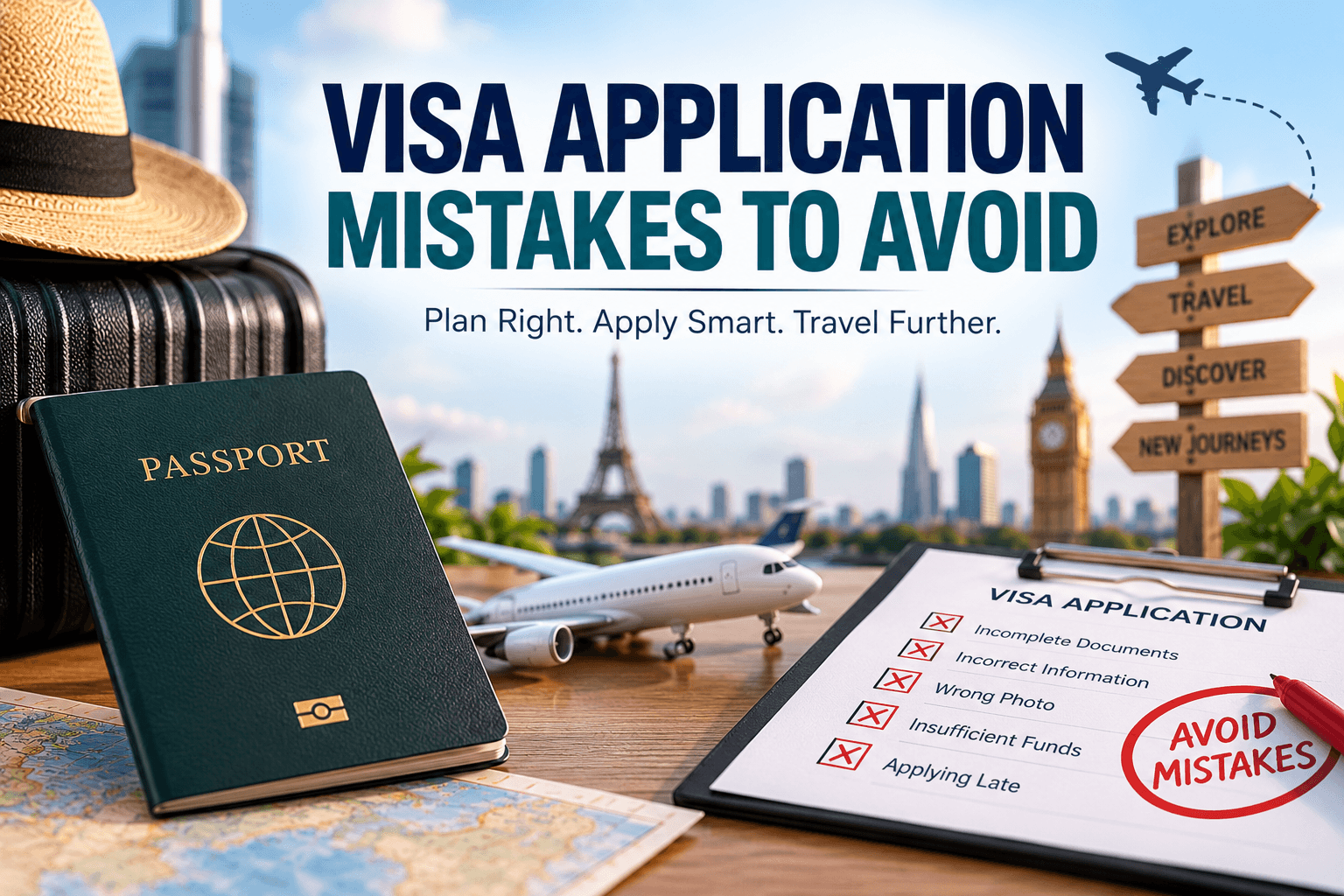
Visa Application Mistakes to Avoid
Applying for a visa is an important part of planning an international trip. Whether you are travelling for tourism, visiting family, attending a business meeting, or going abroad for another purpose, your visa application needs to be accurate, complete, and supported by the required documents.
Many visa problems happen because applicants make simple mistakes during the preparation or submission process. Missing documents, incorrect information, unclear travel plans, or applying too late can result in delays, additional requests, or visa refusal.
For Pakistani travellers, understanding these common mistakes can help make the visa application process more organized and reduce avoidable problems.
1. Providing Incorrect or Incomplete Information
One of the most common visa application mistakes is entering incorrect or incomplete information.
Your application should accurately match your passport and supporting documents. Even small differences in your name, date of birth, passport number, travel dates, employment information, or other personal details can create questions during processing.
How to avoid it
Before submitting your application, carefully review every section. Make sure the information matches your passport and other supporting documents.
Do not rush through the application simply to submit it quickly.
2. Not Checking Passport Validity
Many countries require your passport to remain valid for a certain period beyond your intended stay. Some destinations may also require a specific number of blank passport pages.
Applying without checking your passport validity can create unnecessary problems.
How to avoid it
Check your passport expiry date before starting your visa application. Also review the destination country's current passport validity requirements.
If your passport is close to expiry, consider whether you need to renew it before applying.
3. Missing Required Documents
Visa applications often require several supporting documents. Depending on the destination and visa type, these may include:
- Passport
- Passport-size photographs
- Bank statements
- Employment or business documents
- Proof of accommodation
- Flight information
- Travel insurance, where required
- Invitation letter, where applicable
- Previous travel history
- Other supporting documents
Submitting an incomplete application can cause delays or negatively affect the assessment.
How to avoid it
Create a checklist based on the specific visa requirements for your destination. Do not rely only on a general visa checklist because requirements can differ between countries and visa categories.
4. Submitting Incorrect Photographs
Visa photographs usually have specific requirements regarding size, background, facial position, lighting, and image quality.
A photograph that does not meet the required specifications may be rejected or require replacement.
How to avoid it
Follow the official photograph specifications for the visa you are applying for. Avoid assuming that a standard passport photograph will automatically meet every country's visa requirements.
5. Providing Weak Financial Documents
Financial evidence is an important part of many visa applications. Applicants may need to demonstrate that they can reasonably afford their trip and expenses.
Submitting unclear, outdated, or insufficient financial documentation can raise questions about your ability to support yourself during the visit.
How to avoid it
Prepare the financial documents requested for your specific visa. These may include recent bank statements, salary slips, employment evidence, business documents, or other legitimate proof of funds.
Your financial documents should be genuine, consistent, and easy to understand.
6. Inconsistent Information Between Documents
Another common mistake is providing information that does not match across the application and supporting documents.
For example, your application may show one travel date while your accommodation documents show another. Similarly, employment information, income figures, or personal details should not contradict the information provided elsewhere.
How to avoid it
Review your complete application as one package rather than checking each document separately.
Make sure your personal information, travel dates, purpose of travel, employment details, and financial information are consistent.
7. Not Providing a Clear Travel Plan
A visa officer may need to understand why you are travelling and what you intend to do during your visit.
A vague or poorly explained travel plan can make an application less convincing.
How to avoid it
Provide a clear and realistic explanation of your intended trip. Depending on the visa requirements, this may include your destinations, expected dates, accommodation, and purpose of travel.
Your travel plans should be consistent with the documents you submit.
8. Providing False or Misleading Information
Never provide false information simply to make an application appear stronger.
This includes falsifying financial documents, employment information, travel history, invitation letters, or other supporting evidence.
Even information that appears minor can create serious problems if discovered.
How to avoid it
Always provide genuine and accurate information. If there is something unusual in your circumstances, it is generally better to explain it properly than to hide or alter the facts.
9. Failing to Demonstrate Strong Reasons to Return
For many temporary visit visas, applicants may need to demonstrate that they intend to leave the destination country after their authorized stay.
Depending on your circumstances, evidence may include employment, business responsibilities, family connections, property, education, or other legitimate commitments in your home country.
How to avoid it
Provide relevant and genuine evidence that explains your circumstances and supports the purpose of your trip.
There is no single document that guarantees visa approval. The overall application and individual circumstances are important.
10. Not Checking Destination-Specific Requirements
Visa requirements are not the same for every country.
Applicants sometimes prepare documents based on information they found for another country or an older application. This can result in missing documents or following the wrong procedure.
How to avoid it
Always check the latest requirements for your specific destination, nationality, visa category, and travel purpose before submitting your application.
Requirements can change, so avoid relying solely on old checklists or information from previous applications.
11. Applying Too Close to Your Travel Date
Waiting until the last minute to apply can create unnecessary pressure.
Visa processing times can vary. Some applications may also require additional documents, interviews, biometrics, or other processing steps.
How to avoid it
Start preparing your application well before your intended travel date. Allow additional time for document preparation, appointments, processing, and unexpected delays.
Do not book your entire trip around an assumed visa processing time without checking the relevant requirements and conditions.
12. Paying the Wrong Visa Fee
Visa fees and payment methods vary depending on the destination and visa category.
Using the wrong payment method or paying an incorrect amount can delay the application process.
How to avoid it
Check the official visa fee and payment instructions before making a payment. Keep your payment receipt or confirmation for your records.
13. Ignoring Previous Visa Refusals
If you have previously been refused a visa, you should not simply ignore it when a future application asks about previous refusals.
Providing incomplete or misleading information about your visa history can create additional concerns.
How to avoid it
Answer questions about previous visa applications and refusals truthfully. If appropriate, understand the reason for the previous refusal and address the relevant weaknesses in your new application.
14. Using Unverified or Outdated Information
Visa rules can change. Information found in an old social media post, outdated article, or previous application may no longer be accurate.
This is particularly important when requirements involve documentation, fees, appointment procedures, insurance, financial evidence, or processing arrangements.
How to avoid it
Use current information from the relevant embassy, consulate, immigration authority, visa application centre, or other official source.
15. Not Keeping Copies of Submitted Documents
After submitting an application, you may need to refer back to the information and documents you provided.
Failing to keep copies can make it difficult to remember exactly what was submitted.
How to avoid it
Keep digital or physical copies of your application form, supporting documents, payment receipts, appointment confirmations, and other important records.
What Happens If Your Visa Application Is Refused?
A visa refusal does not necessarily mean that you can never obtain a visa in the future. However, the appropriate next step depends on the destination country, visa category, and reason for refusal.
If your application is refused, carefully review the refusal information provided by the relevant authority. Understanding the reason can help you determine whether you should correct an issue, provide additional evidence, appeal where permitted, or submit a new application.
Avoid immediately submitting the same application again without understanding what went wrong.
How to Prepare a Stronger Visa Application
Before submitting your application, use this simple checklist:
- Check your passport validity.
- Complete every required section accurately.
- Prepare all required supporting documents.
- Make sure information is consistent across documents.
- Provide genuine financial evidence.
- Clearly explain your purpose of travel.
- Follow the correct photograph specifications.
- Check the latest destination-specific requirements.
- Pay the correct visa fee.
- Apply sufficiently early.
- Keep copies of everything you submit.
- Never provide false or misleading information.
Final Thoughts
A successful visa application starts with careful preparation. Many avoidable problems come from simple mistakes such as incomplete forms, missing documents, inconsistent information, weak supporting evidence, or applying too late.
Before submitting your application, take the time to review your documents carefully and make sure they meet the current requirements for your destination and visa category.
If you are unsure about the documentation or application process, getting professional assistance with visa filing and document preparation can help you understand the requirements and organize your application more effectively.
For Pakistani travellers planning an international trip, proper preparation can make the visa process smoother and help you travel with greater confidence.
Share this article
Keep Exploring
Related Articles
Single Entry vs Multiple Entry Visa
Single entry and multiple entry visas differ mainly in how many times you can enter a country during the visa's validity. Learn how each visa type works and which may suit your travel plans.
10 September 2026
Visa Cover Letter: What Should It Include?
A well-prepared visa cover letter can clearly explain your travel purpose, itinerary, finances, and supporting documents. Learn what to include and how to write an effective cover letter.
7 September 2026
Bank Statement Requirements for Visa Applications
Bank statements are an important part of many visa applications. Learn what visa officers may look for, how to prepare your statements, and common financial-document mistakes to avoid.
7 September 2026
Need help planning your journey?
Contact New Umer Holidays Travel for flights, Umrah services, visa assistance, hotel bookings and travel insurance.