What Is a Visa on Arrival?
Wondering what a visa on arrival means? Learn how it works, what documents you may need, where to get it, and what to check before travelling.
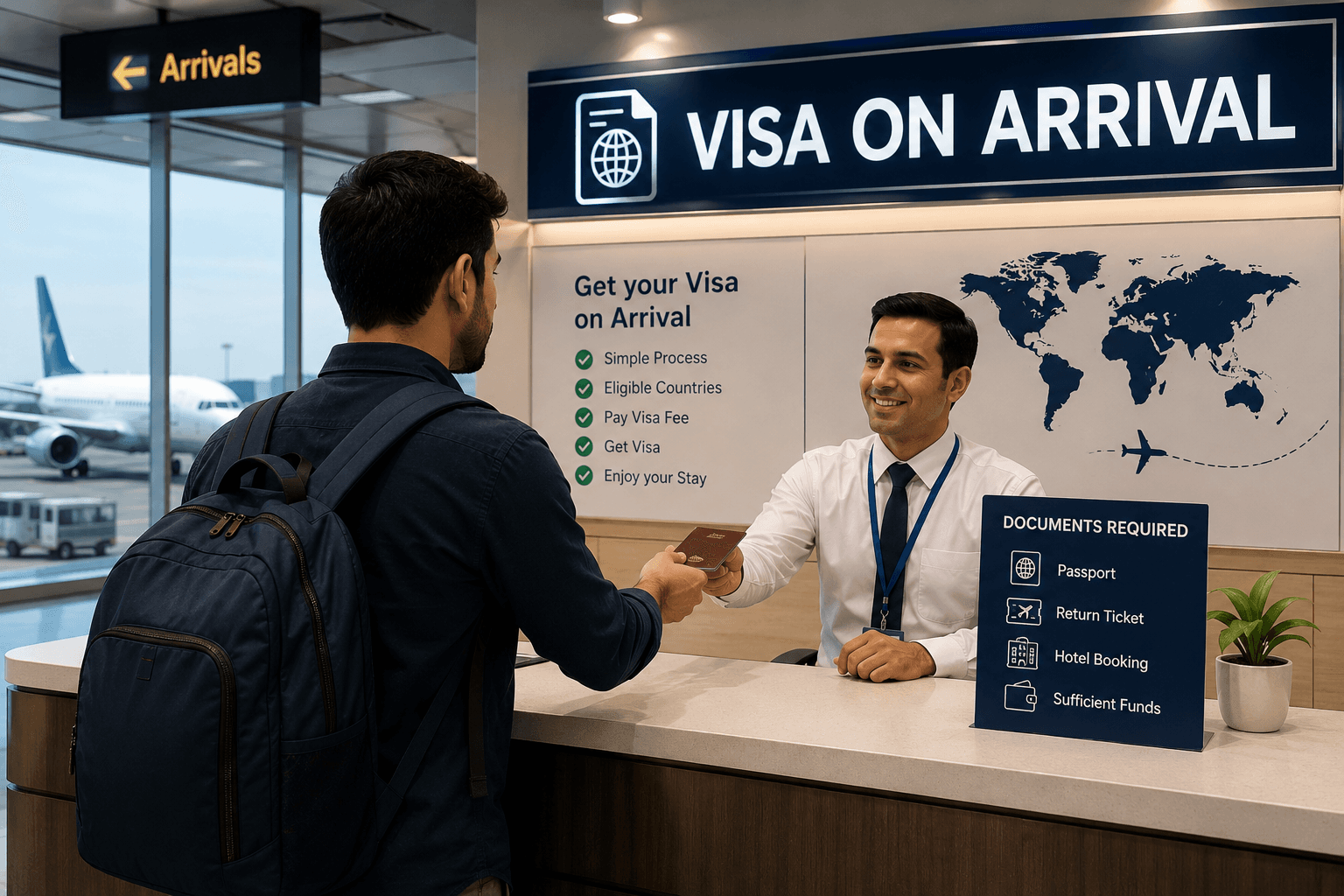
What Is a Visa on Arrival? A Complete Guide for Travellers
When planning an international trip, you may come across different types of visa requirements. One of them is a Visa on Arrival, which can make international travel easier for eligible travellers.
Instead of obtaining a visa before travelling, eligible passengers can apply for or receive the visa after arriving at their destination.
However, visa-on-arrival rules vary from country to country, and not every traveller is eligible.
What Is a Visa on Arrival?
A Visa on Arrival (VOA) is a type of travel permission that eligible travellers can obtain after reaching their destination country.
Unlike a traditional visa that must usually be obtained before travelling, a visa on arrival is processed at an approved airport, border crossing, or other designated entry point.
The process may involve:
- Completing an application
- Presenting your passport
- Providing supporting documents
- Paying a visa fee
- Waiting for approval
- Receiving the visa or entry permission
The exact process depends on the destination country.
How Does a Visa on Arrival Work?
The process is generally straightforward, but requirements differ between countries.
A typical process may look like this:
Arrive at Destination → Go to Visa-on-Arrival Counter → Submit Documents → Pay Fee → Receive Visa → Immigration Clearance
Some countries may require travellers to complete an online pre-registration or application before arriving.
Who Can Get a Visa on Arrival?
Visa-on-arrival eligibility depends on your nationality and the rules of the destination country.
Some countries offer VOA facilities to citizens of selected countries, while others may provide them only under specific conditions.
Eligibility can depend on:
- Passport nationality
- Purpose of travel
- Length of stay
- Entry point
- Travel documents
- Return or onward ticket
- Accommodation
- Financial requirements
Always check the latest official requirements before travelling.
What Documents May Be Required?
The documents required for a visa on arrival vary by destination.
Commonly requested documents may include:
- Valid passport
- Passport-size photograph
- Return or onward ticket
- Hotel or accommodation confirmation
- Proof of sufficient funds
- Travel insurance, where required
- Visa-on-arrival application form
- Applicable visa fee
Some destinations may require additional documents.
How Much Does a Visa on Arrival Cost?
Visa-on-arrival fees vary depending on the country, nationality, visa type, and length of stay.
The fee may be payable:
- At the airport
- At a border crossing
- Online before arrival
- Through another approved payment method
Some countries offer visa-on-arrival entry free of charge to eligible travellers, while others charge a specific fee.
Always check the current official fee before travelling.
How Long Is a Visa on Arrival Valid?
The validity period depends on the destination and type of visa.
A visa on arrival may allow a traveller to stay for a specific number of days or weeks.
For example, a destination may permit an eligible tourist to stay for a limited period after receiving the visa.
Do not assume that the visa validity period and permitted stay are always the same.
Check the conditions written on the visa or provided by the immigration authorities.
Can You Extend a Visa on Arrival?
Some countries may allow a visa on arrival to be extended, while others do not.
If an extension is possible, it may require:
- An application
- Additional fees
- Supporting documents
- Approval from immigration authorities
Never overstay your permitted period. Check the official rules before your visa expires.
Visa on Arrival vs Traditional Visa
There is an important difference between the two.
Traditional Visa
A traditional visa is generally obtained before travelling.
The process may involve:
- Application submission
- Supporting documents
- Visa fees
- Biometrics
- Interview
- Processing period
Visa on Arrival
A visa on arrival is generally obtained after reaching the destination.
It may involve:
- Arrival at an approved entry point
- Document verification
- Application or registration
- Payment of a fee
- Visa issuance
The exact process depends on the destination.
Visa on Arrival vs Visa-Free Travel
Visa on arrival and visa-free travel are not the same.
Visa-Free Travel
Eligible travellers can enter without obtaining a visa, subject to the country's entry conditions.
Visa on Arrival
Eligible travellers obtain the required visa after arriving at the destination.
Both options can simplify international travel, but they have different requirements.
Visa on Arrival vs E-Visa
An e-visa is generally applied for electronically before travelling.
The traveller may:
- Complete an online application.
- Upload required documents.
- Pay the applicable fee.
- Wait for approval.
- Receive the e-visa electronically.
A visa on arrival, on the other hand, is generally processed after reaching the destination.
Some countries offer both options, allowing eligible travellers to choose between applying in advance or obtaining the visa on arrival.
Can You Get a Visa on Arrival at Any Airport?
Not necessarily.
A country may offer visa-on-arrival services only at specific airports, border crossings, or designated entry points.
This is especially important if your itinerary includes:
- Connecting flights
- Land borders
- Multiple airports
- Regional travel
Before booking your trip, confirm that your planned entry point supports visa-on-arrival processing.
Do You Need a Return Ticket?
Some destinations may require proof of onward or return travel before issuing a visa on arrival.
You may be asked to show:
- Return flight ticket
- Onward flight booking
- Travel itinerary
The requirement varies by country.
Do You Need Proof of Accommodation?
Some countries may ask for evidence of where you will stay.
This could include:
- Hotel reservation
- Accommodation confirmation
- Host information
- Invitation letter
Keep your accommodation details accessible when travelling.
What If Your Visa on Arrival Is Refused?
Having a passport from an eligible country does not always guarantee entry.
Immigration authorities may refuse entry or visa issuance if a traveller does not meet the applicable requirements.
Possible issues can include:
- Invalid passport
- Missing documents
- Insufficient funds
- Lack of onward travel
- Incorrect information
- Failure to meet entry conditions
Always check the latest official requirements before travelling.
Important Passport Requirements
Your passport may need to meet specific conditions for a visa on arrival.
These can include:
- Minimum remaining validity
- Blank pages
- Undamaged passport
- Correct personal information
Some destinations require several months of remaining passport validity.
Never assume that an unexpired passport automatically meets the destination's entry requirements.
Tips for Travelling With a Visa on Arrival
Before travelling:
- Check whether your nationality is eligible.
- Confirm that your destination offers visa on arrival.
- Check the approved entry points.
- Verify the current visa fee.
- Check passport validity requirements.
- Prepare your accommodation details.
- Keep your return or onward ticket accessible.
- Carry the required supporting documents.
- Keep a payment method available for the visa fee.
- Check the maximum permitted stay.
Common Mistakes to Avoid
Travellers should avoid:
- Assuming everyone is eligible for VOA
- Checking outdated visa information
- Arriving at an airport that does not issue VOA
- Forgetting passport validity requirements
- Not carrying a return ticket when required
- Not having accommodation details
- Carrying insufficient funds for required fees
- Assuming a visa on arrival guarantees entry
- Overstaying the permitted period
Final Thoughts
A Visa on Arrival can make international travel more convenient because eligible travellers may be able to obtain their visa after reaching their destination instead of applying through an embassy beforehand.
However, eligibility, fees, required documents, permitted stay, and entry procedures vary between countries.
Before booking your flight, always check the latest official information for your nationality, destination, and planned entry point.
Being prepared with the correct documents can make the visa-on-arrival process much smoother and help you avoid unexpected problems at the airport.
Share this article
Keep Exploring
Related Articles
Single Entry vs Multiple Entry Visa
Single entry and multiple entry visas differ mainly in how many times you can enter a country during the visa's validity. Learn how each visa type works and which may suit your travel plans.
10 September 2026
Visa Cover Letter: What Should It Include?
A well-prepared visa cover letter can clearly explain your travel purpose, itinerary, finances, and supporting documents. Learn what to include and how to write an effective cover letter.
7 September 2026
Bank Statement Requirements for Visa Applications
Bank statements are an important part of many visa applications. Learn what visa officers may look for, how to prepare your statements, and common financial-document mistakes to avoid.
7 September 2026
Need help planning your journey?
Contact New Umer Holidays Travel for flights, Umrah services, visa assistance, hotel bookings and travel insurance.