Visa vs Travel Authorization Explained
Confused about visas and travel authorizations? Learn the difference between them, when you need each one, and how they affect international travel.
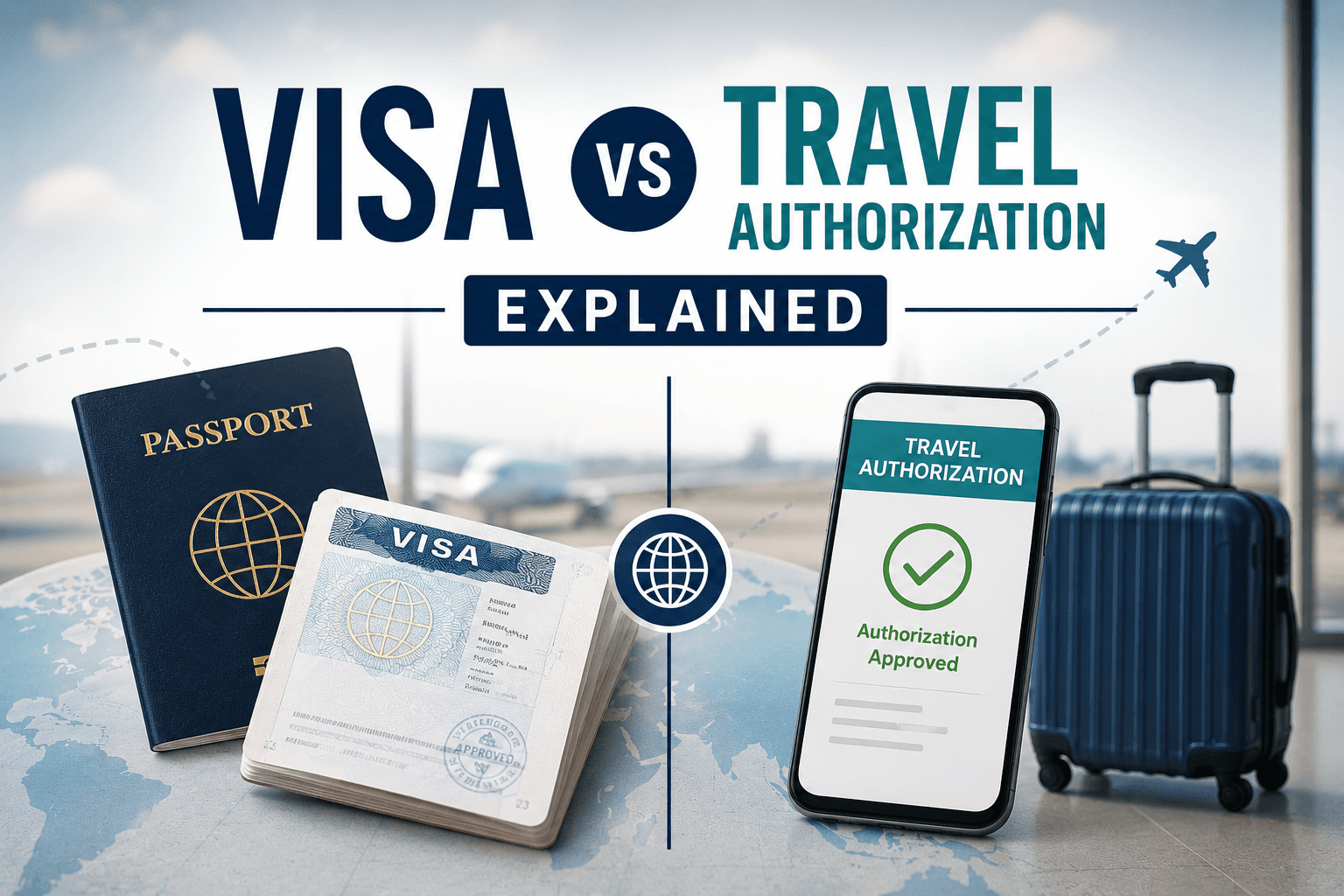
Visa vs Travel Authorization Explained: What's the Difference?
When planning an international trip, you may come across terms such as visa, travel authorization, e-visa, and visa-free travel. Although these terms are sometimes used interchangeably, they can refer to different travel requirements.
Understanding the difference can help you prepare the correct documents before booking your flight.
What Is a Visa?
A visa is an official authorization that allows a traveller to request entry into a country for a specific purpose and under specific conditions.
Depending on the country and visa type, a visa may be issued as:
- A sticker placed in your passport
- An electronic visa
- A digital authorization linked to your passport
Common types include:
- Tourist visa
- Business visa
- Student visa
- Work visa
- Transit visa
- Family or visit visa
The application process can involve submitting documents, paying a fee, and sometimes attending an interview or providing biometric information.
What Is a Travel Authorization?
A travel authorization is generally a digital permission that allows eligible travellers to travel to a country without obtaining a traditional visa beforehand.
It is often connected electronically to the traveller's passport.
Some countries use electronic travel authorization systems for travellers from visa-exempt countries.
A travel authorization may involve a simpler online application compared with a traditional visa.
However, having travel authorization does not necessarily guarantee entry. Final admission is normally determined by immigration authorities at the destination.
Visa vs Travel Authorization
The main difference is usually the type of travel permission and application process involved.
Visa
A visa may:
- Require a more detailed application
- Require supporting documents
- Have an application fee
- Require biometrics or an interview in some cases
- Be issued electronically or physically
- Specify the purpose and conditions of travel
Travel Authorization
A travel authorization may:
- Be completed entirely online
- Require fewer supporting documents
- Be linked electronically to your passport
- Apply mainly to eligible visa-exempt travellers
- Allow travel for specified purposes and periods
The exact rules depend on the destination country.
Is a Travel Authorization the Same as a Visa?
No. A travel authorization and a visa are not necessarily the same thing.
A travel authorization is often designed for travellers who are already eligible for visa-free or simplified entry.
A visa may be required for travellers who do not qualify for visa-free travel.
The terminology and legal effect can vary between countries, so always check the official entry requirements for your nationality.
What Is an E-Visa?
An e-visa is a visa that is applied for electronically.
Instead of visiting an embassy to submit a traditional paper application, the traveller may complete the application online.
Depending on the country, the process can include:
- Completing an online application
- Uploading documents
- Paying the visa fee
- Waiting for processing
- Receiving the approved e-visa electronically
An e-visa is still a visa, even though the application and approval process are digital.
What Is Visa-Free Travel?
Visa-free travel means that eligible travellers can enter a country without obtaining a visa before travelling, subject to the country's entry conditions.
However, visa-free does not necessarily mean there are no requirements.
Travellers may still need:
- A valid passport
- A return or onward ticket
- Proof of accommodation
- Sufficient funds
- Travel authorization, where applicable
- Compliance with permitted stay limits
Why Do Countries Use Travel Authorizations?
Electronic travel authorization systems can allow countries to conduct basic traveller screening before passengers arrive.
They can also simplify travel for eligible visitors who do not need a traditional visa.
For travellers, the process may be faster and more convenient because the application can often be completed online.
Can You Travel Without a Visa or Authorization?
It depends entirely on your nationality and destination.
Some travellers may be:
- Visa-free
- Required to obtain a travel authorization
- Required to obtain an e-visa
- Required to obtain a traditional visa
- Required to obtain a visa on arrival
Never assume that another traveller's requirements are the same as yours.
Visa vs Travel Authorization: Simple Example
Imagine two travellers visiting the same country.
Traveller A is from a country that has a visa-exemption arrangement with the destination. They may only need an approved electronic travel authorization before boarding.
Traveller B is from a country that requires a visa. They may need to submit a visa application and supporting documents before travelling.
The destination is the same, but the entry requirements can be different because of the travellers' nationalities.
Does a Visa Guarantee Entry?
No.
A visa generally allows a traveller to travel to a country's border and request entry under the conditions of the visa.
Immigration officers can still verify:
- Passport
- Visa
- Purpose of travel
- Accommodation
- Length of stay
- Supporting documents
- Other entry requirements
Final admission is determined by the relevant immigration authorities.
How Long Is a Visa or Authorization Valid?
Validity periods vary significantly.
A document may allow:
- A single entry
- Multiple entries
- Travel during a specific validity period
- A specific maximum length of stay
It is important to understand the difference between validity and permitted stay.
For example, a travel document may be valid for several months while allowing only a limited number of days in the country.
What Should You Check Before Travelling?
Before booking or travelling internationally, check:
- Your passport validity
- Whether you need a visa
- Whether you need travel authorization
- Visa or authorization validity
- Maximum permitted stay
- Number of permitted entries
- Processing time
- Application fees
- Transit requirements
- Additional entry conditions
Requirements can change, so use the latest official information from the destination country's immigration or government authorities.
Common Mistakes Travellers Make
Avoid these common mistakes:
- Assuming visa-free means no requirements
- Applying for the wrong type of visa
- Confusing visa validity with permitted stay
- Entering incorrect passport information
- Applying too close to the travel date
- Ignoring transit visa requirements
- Using unofficial websites for applications
- Assuming another person's visa rules apply to you
Final Thoughts
Visa, e-visa, visa-free travel, and travel authorization are different concepts, and understanding them is an important part of international travel planning.
The requirement depends on your nationality, destination, purpose of travel, and sometimes your transit route.
Before travelling, always check the latest official requirements and make sure your passport information matches your visa or travel authorization exactly.
Proper preparation can help you avoid problems during airline check-in, boarding, and immigration.
Share this article
Keep Exploring
Related Articles
Single Entry vs Multiple Entry Visa
Single entry and multiple entry visas differ mainly in how many times you can enter a country during the visa's validity. Learn how each visa type works and which may suit your travel plans.
10 September 2026
Visa Cover Letter: What Should It Include?
A well-prepared visa cover letter can clearly explain your travel purpose, itinerary, finances, and supporting documents. Learn what to include and how to write an effective cover letter.
7 September 2026
Bank Statement Requirements for Visa Applications
Bank statements are an important part of many visa applications. Learn what visa officers may look for, how to prepare your statements, and common financial-document mistakes to avoid.
7 September 2026
Need help planning your journey?
Contact New Umer Holidays Travel for flights, Umrah services, visa assistance, hotel bookings and travel insurance.